
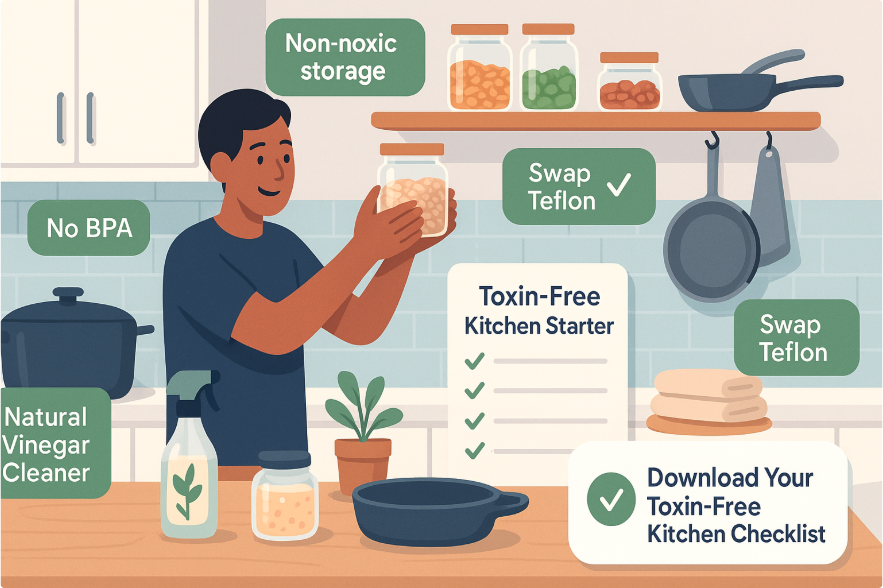
5 Effortless Steps for a Toxin-Free Kitchen
I’ll never forget the day I realized my “healthy” kitchen was actually making my family sick. Despite buying organic groceries and cooking from scratch, I was unknowingly exposing my loved ones to harmful chemicals every single day.
It started when my daughter developed mysterious headaches, and my husband began having respiratory issues. After months of doctor visits with no clear answers, I stumbled upon research about toxin free kitchen practices. What I discovered shocked me – our non-stick pans, plastic storage containers, and even our cleaning products were leaching dangerous chemicals into our food and air.
The good news? Creating a toxin-free kitchen doesn’t require a complete overhaul or breaking the bank. Today, I’m sharing the exact five steps that transformed my family’s health and gave me peace of mind every time I step into my kitchen.
The Hidden Dangers Lurking in Your Kitchen
Before we dive into solutions, let’s talk about the invisible threats that might be compromising your family’s health right now. I was stunned to learn that the average kitchen contains over 60 different chemical compounds, many of which are linked to serious health issues.
- PFAS chemicals from non-stick cookware can stay in your body for years
- Plastic food storage containers release BPA even when not heated
- Traditional cleaning products contain VOCs that linger in indoor air for hours
- Kitchen sponges can harbor more bacteria than toilet seats
But here’s what gives me hope: you don’t need to be a chemistry expert or spend thousands of dollars to protect your family. These five kitchen detox tips will help you eliminate the most dangerous toxins while making your daily cooking routine easier and more enjoyable.
Step 1: Banishing Plastic – What to Use Instead
This was my first and most impactful change. I started by tackling the biggest offenders: plastic food storage containers, cutting boards, and cooking utensils. The transformation was remarkable – not only did my food taste better, but I felt confident knowing I wasn’t feeding my family microplastics with every meal.
The Plastic Problem
Plastic containers, especially when exposed to heat or acidic foods, release harmful chemicals like BPA, phthalates, and PFAS into your food. Even “BPA-free” plastics often contain similar compounds that are just as dangerous.
My Safe Swaps
- Glass Storage Containers: I replaced all my plastic containers with glass ones with BPA-free lids. Pyrex and Anchor Hocking are my go-to brands.
- Stainless Steel Water Bottles: We ditched plastic water bottles for insulated stainless steel ones that keep drinks cold all day.
- Bamboo Cutting Boards: These naturally antimicrobial boards are gentler on knives and don’t harbor bacteria like plastic.
- Wooden Utensils: I replaced all plastic spatulas, spoons, and tongs with beautiful FSC-certified wooden alternatives.
What About Food Wrapping?
Instead of plastic wrap and aluminum foil, I now use:
- Reusable beeswax wraps for covering bowls and wrapping sandwiches
- Silicone stretch lids that fit over any bowl or container
- Unbleached parchment paper for baking and food storage
Step 2: Natural Cleaning Swaps That Actually Work
I used to think I needed a different cleaner for every surface. My cabinet was stuffed with sprays, wipes, and scrubs – most containing harsh chemicals that left residues on the surfaces where I prepared food. Switching to natural kitchen cleaning tips not only simplified my routine but made my kitchen safer for my family.
The Toxic Cleaning Reality
Most conventional cleaners contain VOCs (volatile organic compounds), artificial fragrances, and harsh chemicals that can trigger asthma, cause skin irritation, and leave harmful residues on food preparation surfaces.
My Simple Natural Arsenal
I now clean my entire kitchen with just four ingredients:
- White Vinegar: My go-to degreaser and disinfectant
- Baking Soda: Perfect for scrubbing and deodorizing
- Lemon Juice: Natural antibacterial and fresh scent
- Castile Soap: Gentle but effective for dishes and surfaces
My Favorite DIY Recipes
• 1 cup water
• 1 cup white vinegar
• 10 drops lemon essential oil
Mix in a glass spray bottle. This cuts through grease and leaves surfaces sparkling!
• 1/2 cup baking soda
• 2 tablespoons water
• 1 tablespoon lemon juice
Perfect for burnt pans and stubborn stains!
Natural Alternatives for Specific Tasks
- Dishwasher: Add 1/2 cup white vinegar to the rinse cycle monthly
- Garbage Disposal: Freeze lemon peels in ice cubes and grind them
- Microwave: Heat a bowl of water with lemon slices for 2 minutes, then wipe clean
- Stainless Steel: Polish with olive oil on a microfiber cloth
Step 3: Safer Cookware Options That Perform
This step required the biggest investment upfront, but it’s been the most rewarding. Switching to safe cookware transformed not just my family’s health, but actually improved my cooking. Food tastes better, heats more evenly, and I never worry about toxic fumes filling my kitchen.
Why Non-Stick Isn’t Worth the Risk
Traditional non-stick coatings contain PFAS chemicals (also called “forever chemicals”) that can release toxic fumes when heated above 500°F – something that happens easily during normal cooking. These chemicals accumulate in your body and have been linked to cancer, liver damage, and immune system problems.
My Safe Cookware Favorites
Stainless Steel (My Daily Driver)
- Why I love it: Durable, dishwasher-safe, and heats evenly when you buy quality pieces
- Best for: Sautéing, making sauces, boiling water
- My pick: All-Clad tri-ply stainless steel set
Cast Iron (For High-Heat Cooking)
- Why I love it: Gets better with age, naturally non-stick when properly seasoned, adds iron to food
- Best for: Searing meat, cornbread, anything that needs high heat
- My pick: Lodge cast iron skillet (affordable and American-made)
Ceramic Non-Stick (For Easy Cleanup)
- Why I love it: Truly non-toxic, easy to clean, heats evenly
- Best for: Eggs, delicate fish, anything prone to sticking
- My pick: GreenPan ceramic cookware
Bakeware That’s Actually Safe
I replaced all my non-stick baking pans with:
- Stainless steel baking sheets
- Glass baking dishes (Pyrex or Anchor Hocking)
- Carbon steel baking pans (like professional bakers use)
- Unbleached parchment paper for easy release
Step 4: Clean Food Storage Tips
Food storage might seem like a small detail, but it’s where many families unknowingly expose themselves to daily doses of harmful chemicals. My storage makeover not only eliminated toxins but also kept food fresher longer and made my refrigerator and pantry more organized.
The Storage Chemical Cocktail
Plastic containers, especially when storing acidic, fatty, or hot foods, can leach BPA, phthalates, and other endocrine disruptors directly into your meals. Even “microwave-safe” plastics release chemicals when heated.
My Complete Storage System
For the Refrigerator
- Glass containers with airtight lids: Perfect for leftovers and meal prep
- Stainless steel containers: Great for kids’ lunches and on-the-go meals
- Beeswax wraps: Keep produce fresh without plastic
- Glass jars: Store everything from smoothies to salad dressings
For the Pantry
- Glass canisters: Keep grains, nuts, and dried goods fresh
- Stainless steel containers: Perfect for flour, sugar, and coffee
- Brown paper bags: For storing potatoes and onions
- Mesh produce bags: Washable alternative to plastic produce bags
Smart Storage Strategies
- Cool before storing: Never put hot food in any container – let it cool first
- Leave space: Don’t overfill containers, especially those going in the freezer
- Label everything: Glass containers can look similar, so labeling prevents waste
- Rotate stock: Use older items first to prevent spoilage
What About Freezer Storage?
I used to use plastic freezer bags for everything. Now I use:
- Freezer-safe glass containers (leaving room for expansion)
- Stainless steel containers for soups and stews
- Butcher paper for wrapping meat
- Silicone food storage bags (reusable and freezer-safe)
Step 5: Water Filtration – The Foundation of a Toxin-Free Kitchen
This final step ties everything together. No matter how clean your cookware and storage, if you’re cooking with contaminated water, you’re still exposing your family to toxins. Installing a quality water filter was one of the best investments I made for my family’s health.
What’s Really in Your Tap Water?
Even municipal water that meets EPA standards can contain:
- Chlorine and chloramine (used for disinfection)
- PFAS chemicals from industrial pollution
- Heavy metals like lead from old pipes
- Pesticide residues from agricultural runoff
- Pharmaceutical traces that treatment plants can’t remove
My Water Filter Solution
After researching dozens of options, I chose a multi-stage under-sink filter that removes:
- 99% of chlorine and chloramine
- Heavy metals including lead and mercury
- PFAS chemicals
- Bacteria and cysts
- Pesticides and herbicides
Filter Options for Every Budget
Budget-Friendly ($30-60)
- Pitcher filters: Brita or PUR for basic chlorine removal
- Faucet-mount filters: Easy to install, improves taste immediately
Mid-Range ($100-300)
- Countertop systems: No installation required, removes more contaminants
- Under-sink filters: My choice – out of sight, high capacity
Premium ($500+)
- Whole-house systems: Filters all water entering your home
- Reverse osmosis systems: Removes virtually everything (but also minerals)
Beyond Drinking Water
Don’t forget about the water you use for:
- Cooking pasta and rice: They absorb whatever’s in the water
- Making coffee and tea: Better water = better taste
- Washing produce: No point in organic if you’re washing with contaminated water
- Ice cubes: Filtered water makes clearer, better-tasting ice
Your Toxin-Free Kitchen Transformation Starts Now
I know this might feel overwhelming, but remember – I didn’t transform my kitchen overnight. I started with one small change (swapping out plastic storage containers) and built from there. Each swap made me more confident and motivated to continue.
- Week 1: Replace plastic food storage with glass containers
- Week 2: Make your first batch of natural cleaners
- Week 3: Choose and order one piece of safe cookware
- Week 4: Research and install a water filter
- Month 2: Gradually replace remaining unsafe items as budget allows
The results speak for themselves. My daughter’s headaches disappeared within weeks of our kitchen makeover. My husband’s breathing improved dramatically. And me? I finally have peace of mind knowing that every meal I prepare is nourishing my family, not harming them.
The Unexpected Benefits
Beyond the health improvements, our toxin-free kitchen has brought unexpected joy:
- Food tastes better: Without chemical residues, flavors are cleaner and more vibrant
- Cooking is more enjoyable: Quality cookware makes every task easier
- Less waste: Glass and stainless steel containers last for years
- Beautiful kitchen: Natural materials are more aesthetically pleasing
- Cost savings: No more replacing damaged non-stick pans every year
🎉 Ready to Transform Your Kitchen?
Don’t let another day pass wondering if your kitchen is secretly harming your family’s health. I’ve created a comprehensive Toxin-Free Kitchen Checklist that walks you through every step of the transformation process.
This detailed guide includes:
- Complete shopping lists for safe alternatives
- Budget-friendly swap recommendations
- DIY cleaning recipe cards
- Red flag ingredients to avoid
- Week-by-week implementation timeline
Download Your FREE Toxin-Free Kitchen Checklist
Join thousands of families who have already transformed their kitchens and reclaimed their health!
Final Thoughts: Your Family Deserves a Safe Kitchen
Creating a toxin-free kitchen isn’t about perfection – it’s about progress. Every single swap you make is a step toward better health for your family. Start where you are, use what you have, and do what you can.
Remember, the companies producing toxic kitchen products aren’t going to change unless we stop buying them. Every time you choose a safer alternative, you’re voting with your wallet for a healthier future.
Your kitchen should be a place of nourishment, love, and family gathering – not a source of hidden health hazards. With these five steps, you can create the safe, healthy kitchen your family deserves.
Here’s to your family’s health and many years of safe, joyful cooking in your newly transformed toxin-free kitchen!



One Comment