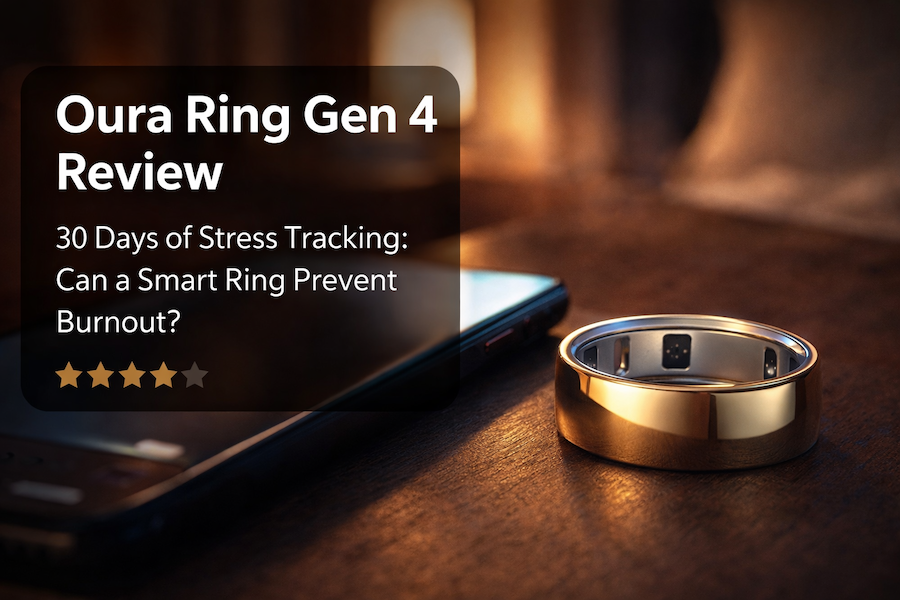
Oura Ring Gen 4 Review: Executive Resilience ROI
30 Days of Stress Tracking: Can a Smart Ring Prevent Professional Burnout?
By Vipin Sawhney | Last Updated: March 2026
Fact-Checked & Human-Verified | Editorial Policy
Transparency: This post contains affiliate links. If you purchase through them, I earn a small commission at no extra cost to you. This funds the 20+ hours of research behind each review.
The Quick Take
The Bottom Line: Buy it — if recovery data and passive health tracking matter more to you than workout metrics.
Who it’s for: The Delhi professional running on 5 hours of sleep, managing back-to-back board calls, and wondering why their marathon pace is slipping despite solid training logs.
My Rating: 8.2 / 10
- Tech Reliability: 9/10
- Physical Utility: 8/10
- Value for Money: 7.5/10 (the subscription stings a little)
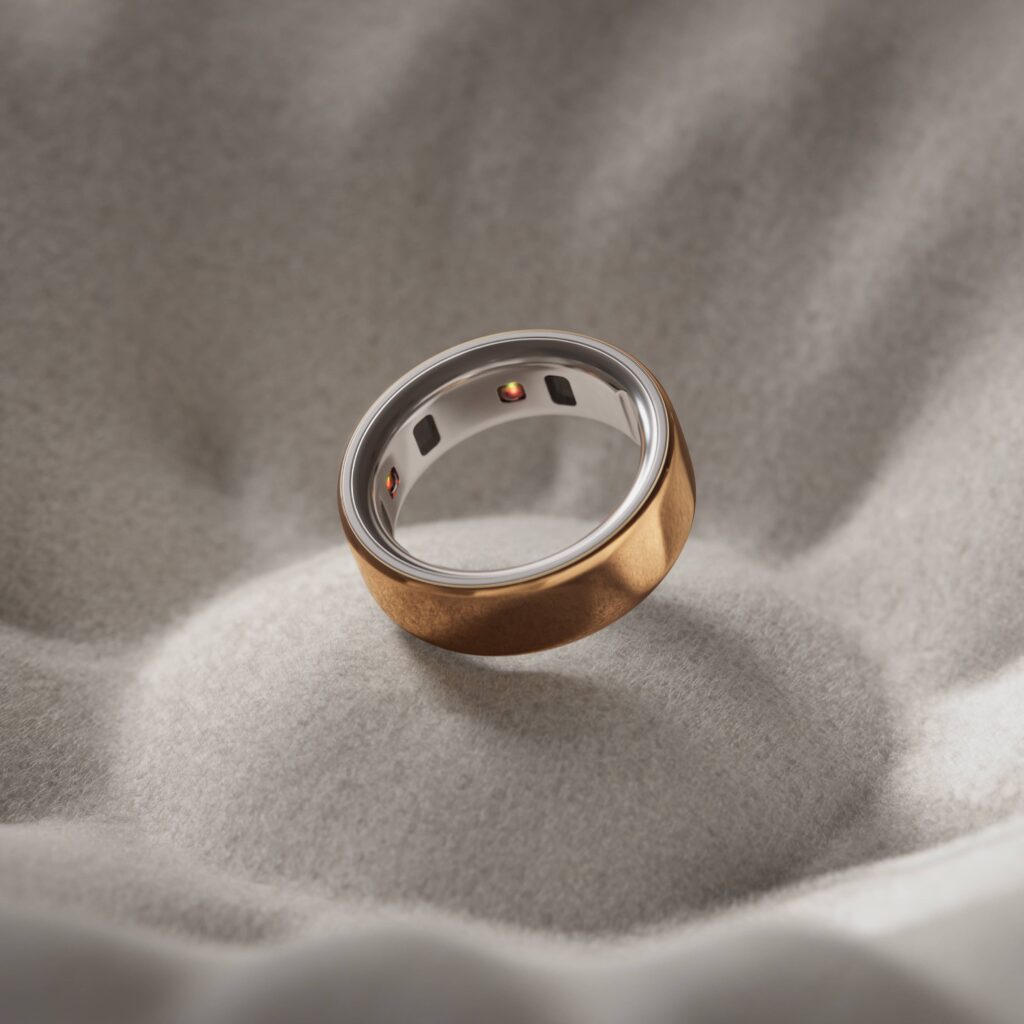
Size before you buy. Get the free sizing kit on Amazon first.
The Hook: The Invisible Performance Drain
There’s a version of overtraining that doesn’t show up in your Garmin data. You’re hitting your targets, your VO2 max is creeping up, your cadence looks clean. But by Thursday of a heavy work week, something feels off on the long run. Your splits drop. You blame the Delhi heat. You blame the late meeting that pushed dinner to 10 PM.
What you’re not measuring is the cumulative toll of 11-hour workdays, fragmented sleep, and the low-grade cortisol grind of back-to-back deadlines. The Oura Ring Gen 4 is built exactly for that blind spot. Not your workout. Your capacity to absorb your next workout.
I wore the Oura 4 alongside my Garmin Forerunner for 30 days. My goal wasn’t to replace the Garmin. It was to find out if a ring could detect invisible stress before it started eating into my training and my focus at work.
My Experience Proof: How I Tested It
- Duration: 30 days straight, worn 24/7 on my right index finger.
- Running: 4 morning runs per week in New Delhi, mostly 5:30 AM before the heat arrived. Distances ranged from 8km recovery jogs to a 20km long run.
- Work context: A 60-hour work week during a high-stakes project sprint, including a round trip to Bangalore with a same-day return flight.
- Cross-reference: HRV readings compared against Garmin’s built-in HRV status and a chest strap for spot checks during runs.
- Gym: 3 weight sessions per week, including deadlifts and pull-up sets (the real “scratch test” for the ring’s finish).
First impression out of the box: The ring is lighter than I expected. The Brushed Silver finish I chose looked more like an everyday ring than a gadget. My colleague in Bangalore asked if it was a new signet ring. I’ll take that as a win.
Hardware Audit: Form vs. Function
The Stealth Factor
The Gen 4’s biggest design win is the fully recessed sensors. The Gen 3 had noticeable bumps on the inside of the ring, which became annoying during sleep if your finger swelled even slightly after an evening workout. The Gen 4 interior is completely flat. The sensors are flush with the titanium body. You genuinely stop noticing it within two days.
The ring is 2.88mm thick, 7.9mm wide, and weighs between 3.3g and 5.2g depending on size. The all-titanium build (the Gen 3 had a plastic resin interior) makes it feel more substantial without adding bulk.
Boardroom Acceptable
I wore this ring into two client meetings in Bangalore where my Garmin Forerunner would have been a distraction. Nobody commented on the Oura ring. If anything, it reads as a wedding band or a minimalist fashion piece. For anyone who needs to look sharp in formal settings, this matters more than it sounds.
Durability: The Scratch Test
Here’s the honest part. After 30 days of deadlifts, kettlebell swings, and laptop bag friction, the Brushed Silver finish held up better than I expected. There are faint hairline scratches under direct light, but nothing visible at normal arm distance. If you choose the standard Black finish, expect micro-scratches to appear faster. The Stealth (matte black) or Brushed Silver options are the safer bet for daily heavy use. The gold finish picks up gym scratches fast based on reviewer reports I cross-referenced.
One thing to know upfront: the sizing is different from the Gen 3. If you’re upgrading, order the new sizing kit. The Gen 4 runs slightly larger due to the recessed sensors, and a wrong-size ring will affect sensor accuracy. Oura ships the sizing kit first, which I found sensible.
Data Deep-Dive: Stress and Resilience Metrics
Did It Catch the Cortisol Spike?
Week two of my test, I had a presentation to a senior leadership team. It was the kind of meeting that starts at 2 PM and determines whether three months of work lands or gets shelved. I was curious whether the Oura’s Daytime Stress graph would show anything.
It did. The stress graph spiked between 1:30 PM and 4 PM, showing a sustained elevated autonomic response during the meeting and the 45 minutes of follow-up calls. By contrast, my morning run (which from a heart rate perspective was more intense) showed a cleaner, shorter spike that resolved quickly. The ring essentially confirmed what I already knew intellectually but rarely look at objectively: meetings cost more nervous system energy than most workouts.
That data alone reframed how I schedule my week.
Sleep ROI: HRV as the Real Number
Oura does sleep tracking well. It breaks down light, REM, and deep sleep stages, and accuracy was close to what my Garmin captured when I wore both. But the metric I found most useful wasn’t sleep duration. It was HRV.
My average overnight HRV during low-stress weeks stayed between 52ms and 61ms. After the Bangalore trip and three back-to-back heavy work days, it dropped to 38ms. My Readiness Score followed the same curve, hitting 62 on days I felt drained. On mornings when I pushed through and ran anyway, my pace reflected it. The ring was right both times.
For marathon training, HRV is the number I now check before deciding whether to run a quality session or drop to an easy effort. I’ve made more good decisions in 30 days than I did in the prior three months of gut-feel training.
The Resilience Score: Useful or Gimmick?
Oura’s Resilience Score is a newer metric that tries to measure how well your nervous system bounces back from stressors over days, not just overnight. It gave me a “Good” rating through most of the test period, with one drop to “Adequate” during my worst week.
My honest take: it’s useful as a trend indicator, not a daily decision tool. Think of it like a rolling 5-day average for your system’s ability to handle load. When mine dropped, I scaled back my Thursday track session to an easy run. I recovered faster that week than I normally would. Whether that was the Resilience Score or just common sense with better data, I can’t fully separate the two. But the data nudged the right decision.
Interested in tracking your own recovery data?
View Oura Ring Gen 4 on Amazon
Free sizing kit available. First month of membership included.
The Real Friction Points
The Subscription Model
$5.99 a month to access the data your ring already collected. I understand why people are annoyed by this, and I’ll be upfront: it’s a legitimate gripe. Without the membership, you get a daily Sleep Score, a Readiness Score, and an Activity Score. That’s it. No HRV trends, no Resilience Score, no Daytime Stress graph, no detailed sleep stages. The metrics that make this ring worth $349 are locked behind the paywall.
The annual plan at $69.99 works out to $5.83/month and is the smarter buy. If you’re on the fence, treat the first free month seriously. Use every feature. If the data changes how you make decisions, the subscription pays for itself quickly. If you’re just looking at your Readiness Score once a week, you might not need it.
Charging Friction
Battery life is listed as up to 8 days. In my testing with sleep tracking and daytime stress monitoring both active, I got consistent 6 to 7 day runs. For most people, that’s manageable. The problem arrives on long trips.
On my Bangalore trip, I forgot the charger. I made it through the 3-day trip fine because I had enough charge, but it added a low-level anxiety I didn’t need. The charger is a proprietary magnetic dock, not USB-C to ring. If you lose it, your ring becomes a very expensive piece of titanium jewelry until a replacement arrives. Carry a backup charger if you travel often. This is not optional advice.
The Activity Tracking Weakness
For tracking runs, the Oura gives you reasonable data: active heart rate, calories, time. What it can’t do is GPS route tracking or proper interval data. My Garmin Forerunner handles pace, splits, and interval analysis far better. This isn’t a knock on the Oura specifically. It’s a ring without GPS. It was never designed to replace a running watch.
For gym work, the automatic activity detection picked up my lifting sessions correctly about 80% of the time. Some sessions it misidentified, though I could correct them manually. During deadlifts specifically, the ring’s sensors compress against the finger under load. Sensor accuracy during strength work is the one area where the ring form factor just isn’t ideal.
Pros and Cons
The High Notes
- HRV tracking is the best I’ve used in a non-clinical wearable
- Daytime Stress graph is genuinely insightful for desk workers
- Completely invisible in formal settings
- 6 to 7 days real-world battery life is excellent
- All-titanium build feels premium at every touch
- Sleep stage accuracy is solid and comparable to dedicated trackers
- App redesign (Today, Vitals, My Health tabs) makes data less overwhelming
The Friction Points
- Core metrics locked behind a $5.99/month subscription
- Proprietary charger creates travel anxiety
- Not a workout tracker — no GPS, no interval splits
- Standard Black finish scratches faster than expected
- Activity tracking misses some gym sessions
- Size fit is different from Gen 3 — new sizing kit is mandatory
Comparison: Passive vs. Active Tracking
If you are comparing the Oura 4 to alternatives, the most common question is which device better fits your actual lifestyle. Here’s how the three main options stack up across the metrics that matter for the professional athlete:
| Metric | Oura Ring Gen 4 | Apple Watch Series 10 | Whoop 5.0 |
|---|---|---|---|
| Form Factor | Discreet ring | Wrist screen | Wrist/bicep strap |
| Recovery Focus | Passive, 24/7 HRV | General fitness | Strain + recovery |
| Battery Life | 6 to 8 days | 18 to 36 hours | 4 to 5 days |
| Boardroom Ready | Yes | Noticeable | No |
| GPS / Intervals | No | Yes | No |
| Subscription Cost | $5.99/month | Free (Apple Health) | Subscription only |
| Best For | Executives + runners who want recovery data without a screen | All-around fitness and Apple ecosystem users | Athletes focused on daily strain and recovery load |
If you run intervals and need lap splits, the Garmin or Apple Watch wins without question. If your priority is 24/7 passive recovery monitoring that doesn’t scream “athlete in the boardroom,” the Oura has no real competition in that lane right now.
From the Training Log: Keshav Sawhney
“While Vipin uses Oura for long-term stress trends and recovery windows, I find it less effective during strength-focused training blocks. Grip pressure during heavy lifts compresses the sensors, and the activity detection doesn’t handle high-intensity interval work as cleanly as a chest strap or a dedicated running watch. For me, the Oura is an off-the-clock companion. The Garmin is what stays on during training.”
The Final Verdict: Invest or Skip?
After 30 days and roughly 280km on foot, the Oura Ring Gen 4 has earned a spot in my daily rotation. Not as a fitness tracker. As a biometric risk management tool. The distinction matters.
What changed in those 30 days: I stopped running hard on low-HRV mornings. I scheduled my most demanding meetings before 3 PM when my recovery was strong. I caught one week of declining sleep quality early enough to adjust before my marathon training block suffered.
None of that sounds like technology. It sounds like better decisions made with better information. Which is, frankly, all anyone should want from a wearable.
Buy this if: You are a professional who travels, works long hours, and needs 24/7 health data without the distraction of a screen or the bulk of a sports watch on your wrist in a client meeting.
Skip this if: You only care about workout stats and already wear a Garmin 24/7. The Oura will not replace what your Garmin does in training. They’re different tools for different questions.
Wait if: You are an existing Gen 3 user with a healthy ring and no real data gaps. The Gen 4 is a better ring, but the Gen 3 is not broken.
“In business, we don’t manage what we don’t measure. The Oura 4 lets you measure the one thing that most productivity systems ignore completely: your capacity to handle stress before it handles you.”
Oura Ring Gen 4
From $349 | Up to 8-day battery | Sizes 4 to 15
Affiliate link. Commission earned at no cost to you. Funds my research.
Frequently Asked Questions
Is the Oura Ring Gen 4 worth it if I already have a Garmin?
Yes, but for a different reason. The Garmin handles training load, GPS, and interval data. The Oura fills the gap your Garmin ignores: passive recovery monitoring, HRV trends over days, and daytime stress tracking during work hours. They complement each other rather than competing. I use both daily.
How accurate is Oura Ring Gen 4’s HRV tracking?
Oura measures HRV during sleep using PPG sensors, not a clinical ECG. Readings are consistent night to night and track directionally with validated devices. Cross-referencing my HRV data against Garmin’s built-in HRV Status, the trends matched closely even when the absolute numbers differed slightly. For trend analysis and recovery decisions, it’s reliable. For clinical-grade readings, use a dedicated ECG device.
Do I have to pay for the Oura membership to use the ring?
No, but without the membership you only see your daily Sleep, Activity, and Readiness Scores. The detailed data (HRV, sleep stages, stress graphs, Resilience Score) require the $5.99/month subscription. The annual plan at $69.99 is cheaper if you’re committed. Your first month is free with a new ring.
Can I wear the Oura Ring Gen 4 in a swimming pool or the ocean?
Yes. The Gen 4 is water resistant to 100 meters, which covers swimming pools, showers, and ocean swimming at normal depths. It’s not rated for scuba diving. In 30 days I wore it through multiple showers and one monsoon-soaked run in Delhi without any issues.
Which Oura Ring Gen 4 finish holds up best to daily wear?
From my testing and comparing notes from other long-term users, Brushed Silver and Stealth (matte black) hold up best against everyday scratching. The standard Black finish uses a PVD coating that shows micro-scratches faster under direct light. Gold scratches visibly at the gym. If you lift weights or work with your hands, avoid glossy finishes.
Is Oura Ring Gen 4 better than Samsung Galaxy Ring?
It depends on what you need. The Samsung Galaxy Ring has no subscription fee, which is a genuine advantage. But Oura’s sleep tracking, HRV accuracy, and the depth of recovery insights still lead the category. If you’re in the Samsung ecosystem and want a no-subscription option, the Galaxy Ring is worth considering. If sleep and HRV data are the priority, the Oura wins on data quality.
Verified Research and Sources

Vipin Sawhney is a Tech Strategist and Marathoner exploring the “ROI of Wellness.” Read full story →