Garmin Forerunner 970 Review: Worth the Upgrade?
.fl-review-container{max-width:860px;margin:0 auto;font-family:Georgia,serif;color:#1a1a1a;line-height:1.8}
.fl-review-container h2{font-size:1.55rem;font-weight:700;color:#1a1a1a;margin-top:2.5rem;margin-bottom:.75rem;border-left:4px solid #2e7d32;padding-left:14px}
.fl-review-container h3{font-size:1.2rem;font-weight:700;color:#2e7d32;margin-top:1.75rem;margin-bottom:.5rem}
.fl-review-container p{margin-bottom:1.2rem;font-size:1.05rem}
.fl-byline{font-size:.9rem;color:#555;margin-bottom:.4rem}
.fl-byline strong{color:#2e7d32}
.fl-qt{background:#f9fafb;border:1px solid #e0e0e0;border-radius:10px;padding:24px 28px;margin:28px 0}
.fl-qt h3{color:#1a1a1a;margin-top:0;font-size:1.15rem}
.fl-qt p{margin:6px 0;font-size:1rem}
.fl-qt .fl-v{font-size:1.1rem;font-weight:700;color:#2e7d32;margin-top:12px}
.fl-rb{display:inline-block;background:#2e7d32;color:#fff;font-size:1.4rem;font-weight:700;padding:6px 18px;border-radius:30px;margin:8px 0 4px}
.fl-pcw{display:grid;grid-template-columns:1fr 1fr;gap:20px;margin:24px 0}
.fl-pros,.fl-cons{border-radius:8px;padding:20px 22px}
.fl-pros{background:#f1f8f2;border:1px solid #b7dfbb}
.fl-cons{background:#fff8f8;border:1px solid #f5c6c6}
.fl-pros h3{color:#2e7d32;margin-top:0}
.fl-cons h3{color:#c0392b;margin-top:0}
.fl-pros ul,.fl-cons ul{margin:0;padding-left:20px}
.fl-pros li,.fl-cons li{margin-bottom:8px;font-size:1rem;line-height:1.5}
.fl-ct{width:100%;border-collapse:collapse;margin:24px 0;font-size:.97rem}
.fl-ct th{background:#2e7d32;color:#fff;padding:12px 14px;text-align:left}
.fl-ct td{padding:11px 14px;border-bottom:1px solid #e8e8e8;vertical-align:top}
.fl-ct tr:nth-child(even) td{background:#f9fafb}
.fl-w{font-weight:700;color:#2e7d32}
.fl-co{background:#fffde7;border-left:4px solid #f9a825;border-radius:4px;padding:18px 22px;margin:24px 0;font-size:1rem}
.fl-co strong{color:#e65100}
.fl-wa{background:#fff3e0;border-left:4px solid #e64a19;border-radius:4px;padding:16px 22px;margin:24px 0;font-size:.98rem}
.fl-cta{background:linear-gradient(135deg,#1b5e20,#2e7d32);color:#fff;border-radius:10px;padding:28px 32px;margin:32px 0;text-align:center}
.fl-cta h3{color:#fff;margin:0 0 10px;font-size:1.25rem}
.fl-cta p{color:#e8f5e9;margin:0 0 18px;font-size:.97rem}
.fl-cta-a{display:inline-block;background:#fff;color:#1b5e20;font-weight:700;font-size:1rem;padding:13px 30px;border-radius:6px;text-decoration:none}
.fl-an{font-size:.82rem;color:rgba(255,255,255,.6);margin-top:10px}
.fl-src{background:#f9fafb;border:1px solid #e0e0e0;border-radius:8px;padding:20px 24px;margin-top:40px}
.fl-src h3{color:#1a1a1a;margin-top:0}
.fl-src ul{padding-left:20px;margin:0}
.fl-src li{margin-bottom:6px;font-size:.93rem}
.fl-src a{color:#2e7d32}
.fl-sub{font-size:1.15rem;color:#555;margin-bottom:16px;font-style:italic}
.fl-fc{display:flex;align-items:center;gap:8px;font-size:.85rem;color:#666;background:#f1f8f2;padding:8px 14px;border-radius:4px;margin-bottom:28px}
.fl-fc span{font-weight:600;color:#2e7d32}
@media(max-width:600px){.fl-pcw{grid-template-columns:1fr}.fl-ct{font-size:.85rem}}
200+ Miles Later: Does Garmin’s New Flagship Justify the Upgrade for High-Performance Professionals?
1. The Executive Summary
The Quick Take
Bottom Line: For current Forerunner 965 owners, this is a Hold unless you log more than 50 miles a week or are actively training for a race. For Forerunner 955 owners or anyone new to Garmin, this is a clear Invest.
Who it is for: The Delhi morning runner who squeezes in 6 AM intervals before heading to the office, or the frequent flyer bouncing between Bangalore and international trips who needs a watch that keeps up with jet lag, heavy workloads, and long training blocks simultaneously.
Performance Score: 9.2 / 10
Based on GPS Reliability, HR Sensor Accuracy, Training Intelligence, and Value for the Price.
Strategic Verdict: This is not just a watch. It is a training management system that happens to sit on your wrist.
2. The Boardroom to Track Stress Test
I have been testing the Garmin Forerunner 970 for the last 10 weeks. In that time I logged over 200 miles of running, including early morning interval sessions in New Delhi where you are dealing with dust, heat, and some genuinely difficult footpaths, a 10K tempo run during a work trip to Bangalore, and daily 24/7 wear through back-to-back meetings, flights, and one brutal product strategy week where sleep dropped below six hours every night.
My setup: paired with a Samsung Galaxy S25, HR data cross-referenced against a Polar H10 chest strap, and GPS tracks verified against a dedicated Garmin GPS unit. I specifically wanted to see how the watch handles the urban canyon problem, which is very real in both Delhi and Bangalore where high-rise buildings and construction cranes box in popular running routes.
Initial Impressions Out of the Box
The packaging is clean and minimal. Nothing surprising. But the moment you put the 970 on your wrist and raise your arm, that AMOLED display hits differently. Genuinely brighter than the 965, noticeably more vivid outdoors. The titanium bezel feels premium without feeling heavy. This does not look like a running watch you swap out before a client meeting. It looks like something you wear all day and no one questions.
At 56 grams, it gained 3 grams over the 965. You will not feel that difference unless you go looking for it.
The Aesthetic Pivot: Desk to Track
I wore this with a formal kurta to a product meeting in Connaught Place. Nobody asked what it was. One colleague assumed it was a premium dress watch. That is the whole point. Previous Forerunners had a sportier, slightly plasticky look that stood out in formal settings. The sapphire crystal lens and titanium bezel on the 970 fix that. The one visual oddity is the yellow sensor guard on the underside of the watch. It is a design decision I genuinely do not understand. Some people are fine with it. I am not one of those people.
The Travel Test and Jet Lag Advisor
During a week that included two Delhi to Bangalore flights and a weekend with completely disrupted sleep, the Jet Lag Advisor feature actually changed how I timed my runs and light exposure. Garmin pulls flight details via Garmin Connect and generates a schedule recommendation. It is not magic, but it gave me a structured reason to get outside at 6:30 AM on day two of the trip instead of skipping the run entirely. That, practically speaking, is worth something.
Wearability Factor
I wore this 24/7 for eight weeks straight, including sleep tracking every night. No wrist irritation, no pressure issues, and comfortable even on hot nights in Delhi where any extra weight on the wrist becomes noticeable. The silicone band is breathable enough that it was not a problem at 5:30 AM in 38-degree heat.
3. Data Precision: Spec Sheet vs. Real-World Reality
The New Sensor Array
The 970 uses Garmin’s Elevate Gen 5 optical sensor, an upgrade from the Gen 4 in the 965. It is also ECG-capable, which is new for the Forerunner line. In day-to-day HR monitoring, the improvement over the 965 is real but not dramatic for most use cases.
For steady-state runs, the wrist sensor matched the Polar H10 within 2 to 3 BPM. During high-intensity intervals, specifically 30-second all-out efforts followed by 90 seconds of rest, the 970 lagged roughly 4 to 8 seconds in catching up to the actual HR spike. That is a standard optical sensor limitation, not a Garmin-specific problem. For post-run zone analysis it is accurate enough. For real-time HR zone coaching during track repeats, a chest strap is still the better tool.
Training Readiness and the Burnout Problem
This is genuinely the most useful part of the 970 for anyone living the high-pressure professional and serious training crossover life. Training Readiness pulls from HRV status, sleep quality, Body Battery, and recent training load to give you a daily score between 0 and 100.
During my product strategy week, short sleep, long hours, no alcohol, but high mental and emotional load, Training Readiness dropped to 28 even though I had not run in two days. My body was recovering from mental stress, not physical effort. The watch flagged this as a rest or easy day window. I ignored it once and did a hard interval session anyway. I felt terrible midway through. The HR data showed a suppressed max HR about 8 beats below my normal ceiling. The 970 was right. That is the kind of feedback that actually changes how you plan training around high-stress work weeks.
GPS Reliability in Urban Canyons
The dual-frequency multi-band GNSS is a real upgrade. On my regular route near Connaught Place where you run past 15-story buildings on both sides, the track logged on Garmin Connect is clean. No ghost zig-zags, no road-crossing jumps. In Bangalore near Indiranagar during the work trip, same clean results despite the construction density. GPS locked in under 10 seconds at the start of every run during my testing period.
4. The Real Friction Points
Every review that avoids friction points is not a review. It is a press release. Here is what actually bothered me.
The Price Jump Is Hard to Justify for 965 Owners
The 970 costs $749. The 965 launched at $599. That is $150 more for a flashlight, a speaker, a slightly better sensor, and a brighter display. If you are coming from a 965, the GPS and training analysis logic is mostly the same. The new features, Running Tolerance and Impact Load, are genuinely useful, but Garmin has confirmed these will not roll out to the 965. If you knew that upfront, the upgrade case strengthens. But the fact that Garmin is using software exclusivity to push hardware pricing is worth naming directly.
Software Bugs Worth Knowing About
Two instances worth mentioning. One firmware update in August 2025 reset my watch face back to default. Annoying but not serious. Second, I had two runs where the ghost touch issue caused the touchscreen to register a tap I did not make, briefly opening the wrong screen mid-run. Garmin patched this in a subsequent firmware update and I have not seen it since. Something to be aware of if you buy early in a product cycle.
The Garmin Ecosystem Lock-In
Garmin Connect works. It is not beautiful, but the data depth is unmatched by Apple Health or most competitor apps. The friction point is exporting raw data. If you want to run your training data through other tools or share HRV data with a coach who uses a different platform, the process is clunky. There is no clean API access the way Oura Ring provides.
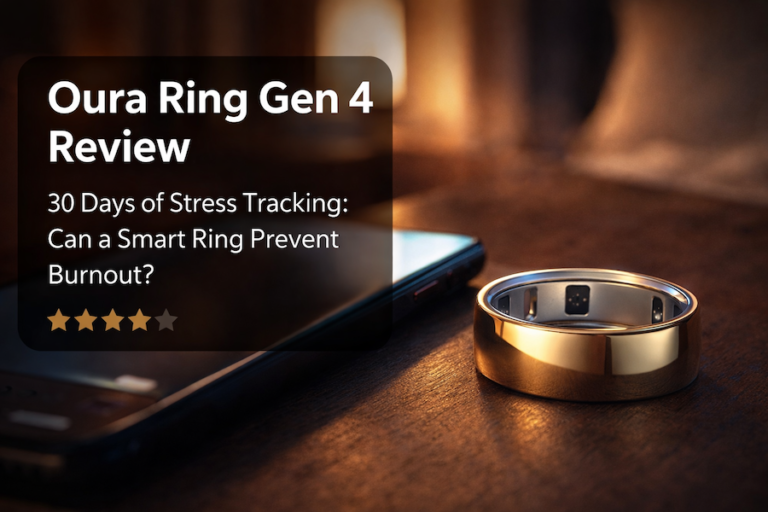
If you pair the 970 with an Oura Ring Gen 4, which is what I do now, you get a more complete picture. The Oura handles overnight sleep HRV in detail, and the Garmin handles daytime training load. I will cover exactly how I layer these two devices in my upcoming Oura Ring Gen 4 review. Short version: they complement each other in ways that one device alone cannot replicate.
5. Comparative Analysis: The Competitive Landscape
| Metric | Garmin Forerunner 970 | Apple Watch Ultra 3 | Coros Vertix 3 |
|---|---|---|---|
| Price | $749 | $799 | $699 |
| Battery (GPS Mode) | 35+ hours | 12 hours | 60+ hours |
| Training Data Depth | Elite (HRV, Load, Tolerance) | Consumer | Intermediate |
| Smartwatch Features | Good | Best in class | Basic |
| GPS Accuracy | Excellent (dual-frequency) | Excellent | Very Good |
| Weight | 56g | 61g | 89g |
| ROI for Serious Runners | High | Medium | Medium |
| Best For | Data-driven runners | iPhone ecosystem users | Ultra-distance events |
If battery life for a multi-day event is your top priority, the Coros Vertix 3 wins that category cleanly. If you are an iPhone-first person who wants the best notification handling and app ecosystem, the Apple Watch Ultra 3 is the right call. But if you are training for a half marathon or marathon and want to understand what your body is actually capable of on any given day, the Garmin 970 training analytics are in a different tier than either competitor.
6. The Ultra Perspective: A 50K Stress Test with Keshav
I handed the 970 to Keshav Sawhney for a 50K ultra training block in Bangalore. His use case is harder on a watch than mine. We are talking 5 to 6 hour trail runs, elevation sections, and battery demands that expose the limits of any GPS device in ways that a 10K road run simply cannot.
His verdict on battery: the 970 held up through a 6-hour run in GPS mode with a few navigation map checks, finishing at 38% battery. Better than he expected given some of the reviews warning about aggressive drain. His note on mapping: the trail overlays in Garmin Connect were accurate for the Bangalore route he used, with one 800-meter section where the track diverged from the actual path by about 15 meters. Not a navigational risk, but worth knowing for technical trail use.
On the Running Tolerance feature, Keshav’s take was blunt. After a 45K training week, the watch suggested pulling back to 32K maximum. He pushed to 50K instead. Recovery metrics during the following week were noticeably slower. “It was right,” he said. “I just did not want to listen.” That is probably a universal experience with any data system that gives you uncomfortable truths.
Pros and Cons
The High Notes
- Training Readiness and Running Tolerance are genuinely useful for high-stress training blocks
- GPS accuracy in urban environments is excellent, better than the previous generation
- Titanium and sapphire crystal build works in both formal and sporting contexts
- Brighter AMOLED is readable in direct Delhi summer sun
- Jet Lag Advisor works well for frequent India-to-international travelers
- Flashlight is surprisingly practical for pre-dawn runs
- HR accuracy for steady-state runs is within 2 to 3 BPM of chest strap
The Friction Points
- $150 price jump from the 965 is hard to justify for current 965 owners
- Key running features require a $170 HRM-600 chest strap sold separately
- Real-world smartwatch battery is 4 to 5 days with always-on, not the advertised 19
- Yellow sensor guard does not match the premium bezel aesthetically
- Early firmware had ghost touch bugs (since patched)
- Garmin Connect data export is clunky for cross-platform users
7. The Final Verdict: The ROI Calculation
After 200+ miles and 10 weeks of daily use, the Forerunner 970 earns a permanent spot on my wrist. Not because of the flashlight or the brighter screen, but because the training intelligence in this device actually changed decisions I made during a stressful month of travel and variable sleep.
On a Tuesday during peak work pressure, the watch told me to rest when I was planning a hard session. I have ignored watches before. This time the data was specific and hard to dismiss, so I did a 40-minute easy run instead. The following day’s interval session was one of my best in three months. That is the ROI that matters for a device at this price point.
Buy this if:
You run more than 30 miles per week and want recovery precision over smartwatch gimmicks. Or if you are upgrading from a 955 or older Forerunner. Or if you travel frequently and need a watch that works in a boardroom and on a track without switching devices.
Skip this if:
You run casually, do not track training load, and are already on a 965. The upgrade is not $150 worth of improvement for casual use. Wait for a price drop or for the next model cycle.
Wait for a sale if:
You want the 970 but the $749 price gives you pause. Garmin has a track record of dropping Forerunner prices 6 to 9 months post-launch. The 965 regularly hits $499 on sale. The 970 will follow that pattern.
“If you cannot measure your recovery, you cannot manage your performance. The 970 makes that measurement more useful than anything else I have worn.”
Check the Latest Price on Amazon
Prices on the Garmin Forerunner 970 change regularly. Click below for the most current deal.
Transparency Note: If you buy through this link, I may earn a commission, which helps fund the 20+ hours of research that goes into these reviews. This does not change the price you pay or my opinion of the product.
8. Verified Research and Sources

Vipin Sawhney is a Tech Strategist and Marathoner exploring the “ROI of Wellness.” Read full story →