4 Steps To Start Eating Organic Without Overhauling Your Life
Let’s be honest – when I first heard about eating organic, I felt completely overwhelmed. The price tags made my wallet cry, and I thought I’d have to completely revolutionize my entire kitchen overnight. Sound familiar?
Here’s what I wish someone had told me back then: you don’t need to overhaul your entire life to start eating organic. That’s just the overwhelm myth talking.
After years of gradually transitioning to organic eating while staying on budget, I’ve learned that small, strategic changes make all the difference. Today, I’m sharing the exact step-by-step approach that helped me (and thousands of others) start eating cleaner without breaking the bank or losing our sanity.
The Overwhelm Myth: Why Most People Give Up Before They Start
I used to stand in the grocery store, staring at a $6 container of organic strawberries next to the $2.50 conventional ones, feeling like I had to choose between my health and my budget. This all-or-nothing mindset is exactly why so many people never start their organic journey.
The truth? You don’t need to buy everything organic to make a meaningful impact on your health. Research shows that even swapping just a few key items to organic can significantly reduce your pesticide exposure.
The Environmental Working Group found that people who eat organic produce have significantly lower levels of pesticides in their bodies, and you don’t need to eat 100% organic to see these benefits.
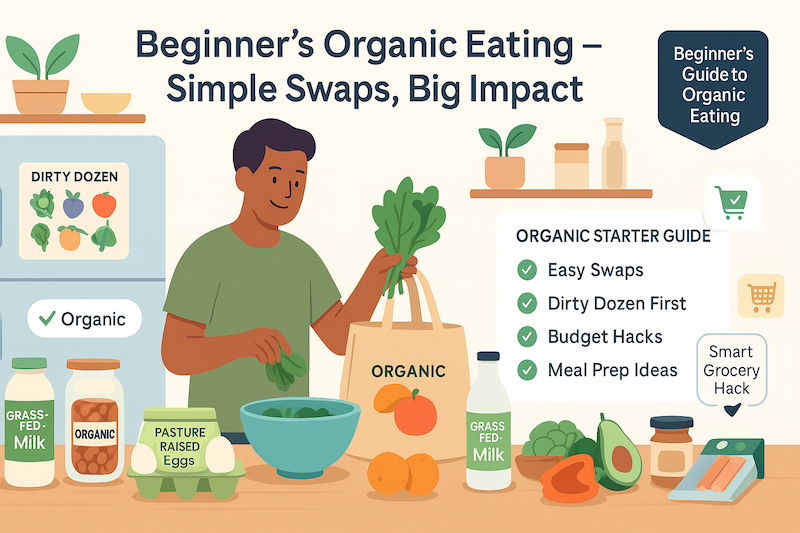
Step 1: Prioritize the “Dirty Dozen” – Your Smart Shopping Blueprint
This is where the magic happens. Instead of trying to buy everything organic, I focus my dollars on the items that matter most: the Dirty Dozen.
What is the Dirty Dozen?
The Dirty Dozen is an annual list compiled by the Environmental Working Group (EWG) of the 12 fruits and vegetables with the highest pesticide residues. These are the items where buying organic gives you the biggest bang for your buck.
The 2025 Dirty Dozen (prioritize buying these organic):
- Spinach – Has more pesticide residues by weight than any other produce
- Strawberries – Found to contain an average of 8 different pesticides per sample
- Kale, Collard & Mustard Greens – Among the highest pesticide detections
- Grapes – Both domestic and imported varieties
- Peaches – Soft skin absorbs more pesticides
- Cherries – High pesticide concentration
- Nectarines – Similar to peaches in absorption
- Pears – Often treated with multiple chemicals
- Apples – 60% contaminated with diphenylamine
- Blackberries – New to the list with 93% of samples showing pesticide residue
- Blueberries – Back on the list with several toxic pesticides detected
- Potatoes – Nearly 90% contain chlorpropham (banned in Europe)
The Clean Fifteen: Where You Can Save Money
On the flip side, the Clean Fifteen are conventionally grown fruits and vegetables with the lowest pesticide residues. You can confidently buy these conventional and save your organic budget for the Dirty Dozen.
The 2025 Clean Fifteen (safe to buy conventional):
- Pineapples
- Sweet Corn (fresh and frozen)
- Avocados
- Papaya
- Onions
- Sweet Peas (frozen)
- Asparagus
- Cabbage
- Watermelon
- Cauliflower
- Bananas
- Mangoes
- Carrots
- Mushrooms
- Kiwi
Pro tip: Save this list on your phone! I screenshot both lists and keep them in my photos for easy reference while shopping.
Step 2: Easy Organic Swaps Anyone Can Make
Once you’ve mastered the Dirty Dozen strategy, these simple swaps will amplify your results without adding complexity to your routine:
Start with Your Morning Routine
- Coffee: Organic coffee beans often cost just $1-2 more per bag, but make a huge difference since you drink it daily
- Milk: If you drink milk regularly, organic dairy products are worth the investment (especially important for kids)
- Eggs: Pasture-raised organic eggs provide better nutrition and taste
Pantry Staples That Matter
- Rice and grains: Buy organic versions of items you eat frequently. Brown rice, quinoa, and oats are affordable organic staples
- Canned tomatoes: Since you’re eating the whole tomato (not peeling it), organic versions reduce acid-leaching concerns
- Olive oil: You use it for cooking multiple times per week, making organic worth the investment
Smart Protein Swaps
- Start small: Choose organic ground beef for tacos one week, then conventional for burgers the next
- Focus on frequency: Buy organic versions of proteins you eat most often
- Consider frozen: Organic frozen chicken and fish are often more budget-friendly than fresh
Step 3: Simple Meal Upgrades That Pack a Punch
You don’t need to learn new recipes or completely change how you cook. These tiny tweaks to your existing meals make a big impact:
The One-Ingredient Upgrade
Pick ONE ingredient in your go-to meals to swap for organic:
- Pasta night: Swap regular pasta sauce for organic (or just the tomatoes)
- Stir-fry: Use organic soy sauce or coconut oil
- Salads: Choose organic spinach or kale from the Dirty Dozen list
- Smoothies: Buy organic frozen berries (often cheaper than fresh organic)
Meal Planning with Seasonality
This is my secret weapon for eating organic affordably:
Spring (March-May):
- Focus on organic asparagus, peas, and early greens
- Stock up on organic berries when they come into season
Summer (June-August):
- Buy organic stone fruits (peaches, nectarines, cherries) at peak season
- Purchase and freeze organic berries in bulk
Fall (September-November):
- Organic apples and pears are most affordable
- Stock up on organic root vegetables for winter
Winter (December-February):
- Rely on frozen organic fruits and vegetables
- Focus on citrus fruits (many are on the Clean Fifteen anyway)
The Batch Cooking Strategy
When you buy organic ingredients, maximize their value:
- Double recipes: Make extra servings using your organic ingredients
- Prep multiple meals: Use organic spinach for salad AND smoothies, AND pasta sauce
- Freeze portions: Store extra servings for busy weeknights
Step 4: Grocery Shopping Hacks That Save Serious Money
After shopping for organic foods for years, I’ve discovered some game-changing strategies that most people miss:
Store Selection Strategy
Don’t shop at just one store. Here’s my weekly routine:
- Costco/warehouse stores: Bulk organic pantry items, frozen organic vegetables
- Trader Joe’s: Affordable organic store-brand products
- Regular grocery stores: Sale items and Clean Fifteen produce
- Farmers’ markets: Organic produce directly from farmers (often cheaper than stores)
Timing Is Everything
- Shop sales first: Plan meals around what organic items are on sale that week
- End-of-day deals: Many stores discount organic produce near closing time
- Seasonal shopping: Buy organic produce when it’s in season locally
The Store Brand Secret
Almost every major grocery chain now has an organic store brand that costs 20-30% less than name brands:
- Whole Foods 365 Organic
- Target Good & Gather Organic
- Walmart Great Value Organic
- Kroger Simple Truth Organic
Digital Savings Tools
I use these apps to stack savings on organic purchases:
- Store apps: Most grocery stores offer exclusive organic coupons through their apps
- Ibotta: Cash back on organic brands
- Flipp: Compare organic prices across multiple stores
- Thrive Market: Online organic marketplace with member discounts
Bulk Buying Strategy
Buy in bulk ONLY for items you use regularly:
- Organic rice, quinoa, oats
- Organic spices (buy small amounts more frequently – they lose potency)
- Organic frozen vegetables
- Organic canned goods when on sale
The Imperfect Produce Hack
Many stores now carry “ugly” organic produce at discounted prices. These fruits and vegetables are cosmetically imperfect but nutritionally identical. Perfect for smoothies, soups, and cooking!
Money-Saving Shopping Timeline
- Week 1: Start with 3 Dirty Dozen items
- Week 2: Add 1 organic pantry staple you use regularly
- Week 3: Try 1 organic protein source
- Week 4: Experiment with 1 new organic store brand item
By month’s end, you’ll have gradually shifted 10-15% of your groceries to organic without a massive budget shock.
Common Mistakes to Avoid
The Perfectionist Trap
Don’t beat yourself up for buying conventional sometimes. Progress, not perfection, is the goal.
Ignoring Frozen Options
Organic frozen fruits and vegetables are flash-frozen at peak ripeness and often cost less than fresh organic options.
Shopping Without a Plan
Going to the store without knowing which items are on sale leads to overspending. Check store apps before shopping.
Buying Everything at One Store
You’ll save significantly by purchasing different organic items from different stores based on their strengths.
Conclusion: Start Small, Stay Consistent
The secret to successfully transitioning to organic eating isn’t willpower or a massive budget overhaul – it’s strategic consistency.
Start with just the Dirty Dozen this week. Get comfortable with that routine. Then gradually add other organic swaps that fit your budget and lifestyle.
Remember: eating conventional produce is still infinitely better than not eating fruits and vegetables at all. The goal isn’t perfection; it’s progress toward cleaner eating that you can sustain long-term.
I’ve seen families reduce their pesticide exposure by 60% just by following the Dirty Dozen strategy and implementing a few of these shopping hacks. You don’t need to spend twice as much on groceries or learn complicated new recipes. Small, smart changes add up to significant health benefits over time.
Ready to Take the Next Step?
Want more tips for healthy living on a budget? Check out our other guides on meal planning, seasonal eating, and building healthy habits that stick. Your health is worth the investment, and these strategies make organic eating accessible for any budget.
Start with one small change today – your future self will thank you.
Have you tried any of these organic eating strategies? What’s been your biggest challenge in transitioning to cleaner food? Share your experience in the comments below – I read every single one and love connecting with fellow health-conscious readers!

Vipin Sawhney is a Tech Strategist and Marathoner exploring the “ROI of Wellness.” Read full story →